Using Practice Questions and Anki
Chapter 07
Which Question Bank is Better?
A common question people ask is: "Which question bank is best for preparing for Step 1?" Both of the major options—AMBOSS and UWorld—are reputable and invest significant resources into crafting questions that are relevant to the USMLE Step 1 exam, at least for MD programs. Unfortunately, I don’t have experience with DO programs, so I can't speak to how well these QBanks align with their exams.
The question isn't really about the quality of the questions—they’re both great in that respect—but more about how well the QBanks reflect the actual exam's content distribution. It’s also about how efficiently the platform's interface supports your exam prep. Ultimately, your goal should be to choose the QBank that gives you the most practice in areas that are most relevant to Step 1, based on the exam’s content distribution.

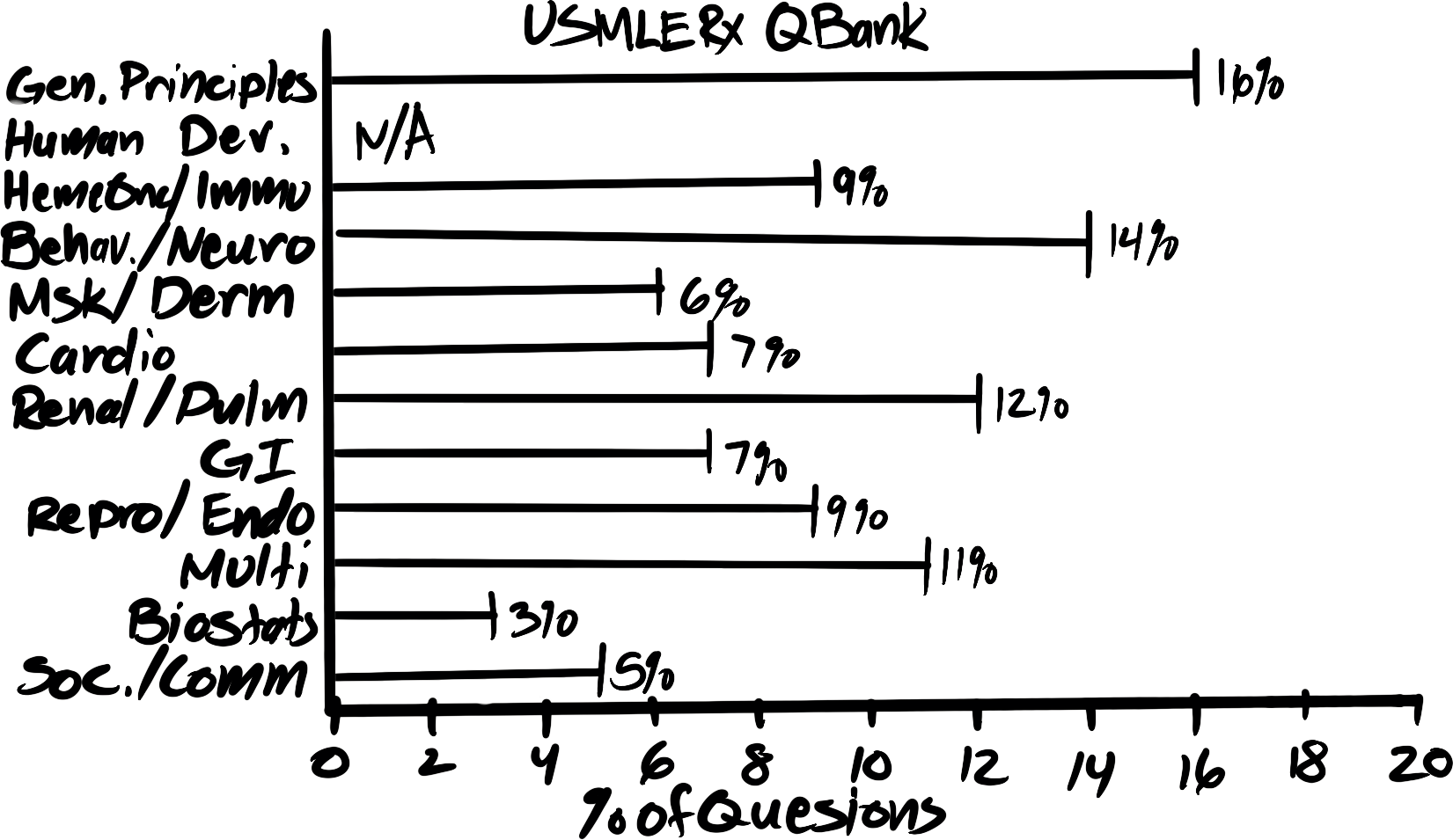
Below is a table that breaks down how many questions from UWorld and AMBOSS are dedicated to each system, compared to the expected number of questions you’ll see on Step 1 for that system. You’ll also find a column showing the percentage of questions from a 280-question Step 1 exam, with ranges that give you an idea of the low, high, and average amount of questions per system.
When I analyze these QBanks, I focus on the comparison between the number of questions in the QBank versus the expected number of questions for each system on Step 1. If there’s a low number of questions in the QBank but a high percentage of questions expected on Step 1 for that system, I prioritize that system during practice. On the flip side, systems that have a high number of questions in the QBank but a low percentage of questions expected on the exam get lower priority.
So, when assessing which QBank is better for your prep, it’s smart to prioritize systems where the QBank offers ample practice for the areas that will be heavily tested on Step 1, based on the official content breakdown. This way, your study time is spent efficiently, targeting high-yield material.
|
|
|
|
|
% on Step 1 |
|
||
| By System |
UWorld |
Amboss |
USMLERx |
low |
high |
average |
Step 1 |
| Human Development |
318 |
|
1% |
3% |
2% |
6 |
|
| HemeOnc/ Immune |
363 |
300 |
265 |
8% |
13% |
11% |
29 |
| HemeOnc |
233 |
176 |
204 |
|
|||
| immunology |
130 |
124 |
61 |
|
|||
| Behavioral/ Neuro |
614 |
423 |
417 |
10% |
14% |
12% |
34 |
| Behavioral |
180 |
99 |
128 |
|
|||
| Neuro |
434 |
324 |
289 |
|
|||
| MSK/Derm |
274 |
244 |
177 |
7% |
12% |
10% |
27 |
| MSK |
172 |
136 |
122 |
|
|||
| Derm |
102 |
108 |
55 |
|
|||
| Cardio |
422 |
261 |
214 |
6% |
11% |
9% |
24 |
| Renal/Pulm |
537 |
326 |
344 |
10% |
15% |
13% |
35 |
| Renal |
231 |
148 |
176 |
|
|||
| pulmonary |
306 |
178 |
168 |
|
|||
| GI |
315 |
226 |
215 |
5% |
10% |
8% |
21 |
| Repro/Endo |
411 |
335 |
266 |
9% |
13% |
11% |
31 |
| Female Repro |
81 |
87 |
153 |
|
|||
| OB |
59 |
59 |
|
|
|||
| Male Repro |
53 |
43 |
|
|
|||
| Endo |
218 |
146 |
113 |
|
|||
| Multi |
23 |
215 |
320 |
11% |
16% |
14% |
38 |
| Biostats |
121 |
74 |
76 |
4% |
5% |
5% |
13 |
| Social Sciences |
116 |
62 |
141 |
6% |
9% |
8% |
21 |
| Ethics |
44 |
|
|||||
| Communications |
116 |
62 |
97 |
|
|||
| GenPrinciples |
246 |
458 |
12% |
16% |
14% |
39 |
|
| Total Questions |
3442 |
2784 |
2893 |
|
|||


How to Use Practice Questions
UWorld is often considered the gold standard when it comes to question banks for Step 1, and for good reason. The questions in UWorld are challenging, and the explanations are thorough. However, simply doing questions isn't enough—you need to use UWorld strategically to maximize its effectiveness.

Here’s how to get the most out of practice questions:
- Focus on High-Yield Areas First
Start with the most high-yield sections, which typically include:
- General Principles (biochemistry, genetics, immunology, cell and molecular biology)
- Biochemistry (metabolism, enzymes, hormones, deficiencies)
- Biostatistics and Communication (ethics, patient interactions)
- Pharmacology (drug mechanisms, adverse effects)
These areas form the foundation of your Step 1 knowledge, and mastering them early will give you a strong start.
- Avoid Random Mixed Blocks
Although many people recommend doing random mixed blocks of 40 questions, I found this method to be inefficient. Step 1 isn’t evenly distributed across topics, so you’re more likely to waste time on less-represented subjects like renal and pulmonary. Instead, focus on multiple 5-10 question blocks targeting high-yield topics or specific areas you’re weak in.
- Tutor Mode for Learning
Always start by doing questions in Tutor Mode. This allows you to learn as you go, rather than waiting until the end of a block to review answers. After each question, whether you got it right or wrong, ask yourself:
- If I got it right: What information did I know that allowed me to answer this correctly?
- If I got it wrong: What information did I need to know to get this right?
Write down the answers to both questions and add them to your cribsheet for later review. This active engagement will help reinforce concepts and prevent passive reading.
- Use UWorld for Test-Taking Skills, Not Just Content
Step 1 isn’t just about knowing the material—it’s about knowing how to take the exam. UWorld is the best tool for practicing this skill. As you go through questions, focus on:
- Time management: Practice answering each question within 90 seconds.
- Pattern recognition: Identify key clinical patterns, especially in common diseases.
- Process of elimination: Practice ruling out incorrect answers to improve your test-taking efficiency.
- Review and Create Cribsheets
After completing each practice question block, review the answers thoroughly and create cribsheets summarizing the key concepts from questions you got wrong. Write down 1-2 sentences that answer:
- What piece of information was necessary to get this question right in less than 90 secs?
- Why did I get it wrong? What’s the key takeaway?
These cribsheets will become your go-to review materials, especially in the final weeks leading up to the exam.
How to Answer Step 1 Practice Questions

Practice questions often contain a lot of irrelevant information ("fluff") that can be distracting. It's easy to get lost in these details, but it's critical to sift through the noise. I noticed this both while doing tons of practice questions and during the actual Step 1 exam.

The key is to focus on the core question. After reading it, pause for a couple of seconds to think critically about what they’re really asking. This will help clarify the question and make it easier to eliminate incorrect answer choices.
Answering questions effectively is all about building a systematic process. It may not feel intuitive at first, but with regular practice—doing 80 to 100 questions a day—this approach will become second nature, like muscle memory. This method saves time and reduces confusion, which is crucial on test day.
If you come across a particularly tough question and don’t know the answer, you can still use process of elimination to narrow it down to two choices. This strategy increases your odds of selecting the correct answer (50/50), as opposed to guessing from all the options, which drops your odds to 25%.
Here’s a streamlined approach I use for tackling practice questions efficiently:
- Start with the last sentence of the passage — This is usually where the actual question is posed.
- Highlight the key question to avoid distractions from unnecessary details, allowing you to focus on what’s being asked.
- If you already have an idea of what it's asking, skip straight to the answer choices and make your selection.
- If the question isn’t clear yet, go back to the second-to-last sentence to gather more clues.
- Still unsure? Now, read the entire passage from the beginning, but stay focused only on the clues directly relevant to answering the question.
Now that you have a strategy in place, it’s time to start practicing questions using this method. With repetition, you’ll feel more confident in navigating even the most challenging questions under time pressure.
Practice Question 1:
We will start off slow with this first question. Read the passage:
A 62-year-old man presents to the emergency department with severe, crushing chest pain radiating to his left arm and jaw. He is diaphoretic and anxious. His medical history includes hypertension, hyperlipidemia, and smoking. An electrocardiogram shows ST-segment elevations in leads II, III, and aVF. The patient is immediately treated with aspirin, oxygen, nitroglycerin, and a thrombolytic agent. Six hours after the onset of symptoms, the patient suddenly develops hypotension, jugular venous distention, and clear lungs on auscultation. Despite resuscitation efforts, the patient dies. Autopsy reveals a ruptured free wall of the left ventricle.
Which of the following is most likely responsible for the patient's death?
Now that you've read the passage, take a moment to mentally rephrase the actual question they’re asking. Focus on the specific question posed in the last line and restate it clearly in your mind. The literal question that they asked from the last line is:
Which of the following is most likely responsible for the patient’s death?
But what are they actually asking you?
Let’s revisit the passage and highlight the pertinent information:
A 62-year-old man presents to the emergency department with severe, crushing chest pain radiating to his left arm and jaw. He is diaphoretic and anxious. His medical history includes hypertension, hyperlipidemia, and smoking. An electrocardiogram shows ST-segment elevations in leads II, III, and aVF. The patient is immediately treated with aspirin, oxygen, nitroglycerin, and a thrombolytic agent. Six hours after the onset of symptoms, the patient suddenly develops hypotension, jugular venous distention, and clear lungs on auscultation. Despite resuscitation efforts, the patient dies. Autopsy reveals a ruptured free wall of the left ventricle.
Which of the following is most likely responsible for the patient's death?
A helpful exercise is to restate the question in your own words, making it as clear and straightforward as possible. This will help you focus on answering it concisely and accurately. We know that we have:
62 year old man, with crushing chest pain radiating to his left arm and jaw, ST segment elevations in multiple leads, And a free wall rupture to the left ventricle, who seemed to have died 6 hours later.
With that information, the passage is asking:
What caused all of this?
You could simplify this question to:
A 62 year old man had chest pain and ST elevation in multiple leads. Six hours later, he died. What was the cause?
By breaking down all that information, we’ve stripped away the fluff and condensed the passage into a clear and concise one-sentence summary. This sharp focus sets us up for success, as we now know exactly what we’re looking for in the answer choices—making the process much easier and more efficient. In actuality, the question in the passage is asking:
What causes a person to die six hours after having a heart attack symptoms?
Or Essentially:
What caused the heart attack symptoms?
Now, let’s go to the answer choices:
A) Neutrophilic infiltration and enzymatic digestion of the myocardium
B) Coagulative necrosis of myocardial tissue
C) Fibrinoid necrosis of small coronary vessels
D) Chronic inflammation and fibrosis of the myocardial wall
E) Lipid-laden macrophages in atherosclerotic plaques
How to Review a Step 1 Practice Question
Now that we’ve selected an answer, it’s time to review it by looking at the correct option. Since we're just getting started, the focus isn’t about getting everything right. Instead, the goal is to nail down the process. If you get the process right, the correct answers will follow. But if you don’t understand how to get questions right, you're leaving it up to the luck gods—and trust me, they’re not usually in your corner when the pressure is on during Step 1. Relying on luck for 280 questions is like throwing up prayers, and at some point, your luck’s going to run out.
Correct Answer: A) Neutrophilic infiltration and enzymatic digestion of the myocardium often weakening the myocardial wall and leading to the risk of rupture.
Now that we’ve chosen our answer, whether you knew it or not, here’s what you need to understand: signs of a myocardial infarction, or one of its causes, is neutrophilic infiltration and enzymatic digestion of the myocardium. All the other answer choices don’t accurately describe what’s happening during a heart attack.
This is a prime example of what I’ve emphasized before—often, the passage will describe something specific without explicitly naming it. The answer choices will throw in distractors, but there’s always one answer that aligns with what the passage is truly saying. Your job is to match what the passage is suggesting with the correct answer choice.
Essentially, both the passage and the right answer choice are saying the same thing. It’s your task to recognize that connection. Think of it as A = B = C, where A is the passage's reference, B is the definition you’re forming in your head, and C is the correct answer choice. You’re simply matching those ideas together.
Now that you have the correct answer, what’s next? This is where you dive into the crucial part: reviewing the question and creating your content review crib sheet. Typically, when you’re using UWorld, AMBOSS, or another question bank, you’ll be in tutor mode so that after you answer each question, you can immediately review it. This method works well because you don’t want to answer 80 questions at once and then have to review all of them at the end when everything’s a blur. Instead, you’re taking your time with each question—getting the reps in, but making sure each rep is the best it can be.
Once you answer a question, take time to review it. If you had no idea what the question was asking, this is when you dive into the explanation. The detailed breakdown they provide is often exactly what you need to understand the context of the question and how to answer it correctly. This process is more effective than just rote memorization or skimming through resources like First Aid or Pathoma because you’re applying what you’re reading directly to the questions at hand.
Instead of wasting time on innocuous facts that don’t have immediate relevance, this approach allows you to focus on the most pertinent information and understand its application. You already know where to start, since you’ve seen the context of the question and have a solid explanation to work from.
Once you've read through the explanation and the educational objective, grab a piece of paper and start building out your crib sheet. This crib sheet becomes your go-to for content review, but now it's targeted toward what’s actually being asked on the exam rather than generic facts.
How to Create a Content Review Cribsheet
With your pen and paper in hand, your goal now is to write one to two lines answering this essential question: What information did I need to know to get this question right in under 90 seconds? The key is to keep it clear and concise. This isn’t about rewriting the whole explanation or overloading yourself with details. It’s about capturing the core insight that helped you solve the problem—what truly mattered for getting the correct answer.
Why are you writing this by hand rather than copying, pasting, or typing? It’s all about kinesthetic learning—the physical act of writing helps you retain information more effectively. Plus, you’re practicing how to break down complex information into simple, actionable steps that will actually be useful to you on test day. This process sharpens your second and third-level reasoning, which is crucial for understanding not just the facts, but also why they matter and how to apply them.
So, for this particular question, ask yourself:
- What was the passage really asking me?
- What was the key information or concept I needed to know?
- How did I eliminate wrong answer choices?
By answering those questions in a few simple lines, you’re solidifying that knowledge in a way that you’ll remember and can use again when a similar question comes up. Now, for this question, we know that... the question was asking:
What causes a patient to have heart attack symptoms and eventually die of free wall rupture?
The answer is: neutrophilic infiltration and enzymatic digestion of the myocardium. Therefore, I would write down:
Neutrophilic infiltration and enzymatic digestion of the myocardium leads to heart attack. Free wall rupture can lead to death after six hours.
After going through all the information in the explanation, you realize that to get the question right, all you needed to know was the connection between ST-elevations, symptoms of a heart attack, and the idea that a free wall rupture caused death after six hours. From there, the only answer that makes sense is neutrophilic infiltration and enzymatic digestion of the myocardium because that is the hallmark of a heart attack. The other answer choices simply don't fit.
Once you have this key insight, you jot it down on your crib sheet and move on to the next question, applying the same approach and methodology. Typically, you do this for every question you get wrong so you can direct your content review effectively. This process is also helpful for jotting down tumor markers, mechanisms of action for drugs, or other concepts you're uncertain about.
By building out your crib sheets, you're creating a personalized content review system that is directly relevant to your specific knowledge gaps. As you go through your questions, this is where you'll focus your study efforts. Each note you write down serves as a key to filling in those gaps and committing the information to memory.
At the end of the day, you should have a strategic list of concepts to work on. And since you've done all the hard work of reading the explanations and educational objectives, this focused review will help you solidify that knowledge. The goal is to commit these concepts to memory so that, when faced with a similar question, you'll never get it wrong again.
Remember: UWorld gives you thousands of practice questions for a 280-question exam. So, there’s no need to go beyond that or risk burning yourself out. The goal is to pass the exam, not ace it. If you’re consistently scoring at or above the passing mark (around 62%), you're on the right track. Once you've hit that target, you can focus on moving forward to the next challenge in your medical education.
How to Write a Clinical Clue
Since Step 1 is now heavily focused on clinical presentations, it’s important to train your brain to recognize patterns and clinical clues that will help you identify the correct answer. Many of the passages you'll encounter on Step 1 are designed around clinical vignettes that give you a roadmap to a specific diagnosis or disease process. Instead of thinking about questions in isolation, you can use a systematic approach where certain clues (A + B + C) will almost always point to a specific condition (D). But in some cases, the clues may change slightly (A + E + F), leading to a different outcome (Z).
Since I'm an analytical person, I like to approach these questions as if they are additive—if you’re given specific components (symptoms, test results, patient history), those will naturally lead you to an answer. Step 1 doesn't try to trick you, but it can mislead you with unnecessary details. This is similar to how a lot of resources in medical education operate: they overload you with information that isn't always useful for answering questions.
The key to success is learning how to navigate the clinical clues presented in the passages. Once you can do that, you’ll be able to sift through misleading information and focus on what matters to find the right answer.
So, just like we practice restating the question and creating our 90-second crib sheet explanation, we can also add a section for “clinical clues” to the majority of our clinical vignettes.
What is a Clinical Clue
A clinical clue is a key piece of information that leads you toward a particular diagnosis or answer. These clues are often based on specific patterns that are consistent across cases, such as a set of symptoms or a particular lab finding. By training yourself to recognize these, you’ll be able to predict where the question is headed as you read through the passage.
How to Use Clinical Clues with Practice Questions
Start adding clinical clues to your crib sheets and eventually use them to create Anki cards. This will help reinforce your understanding of how clinical vignettes point toward certain diseases. As you practice, you’ll start recognizing these patterns more quickly and be able to draw connections between the clues in the passage and the answer choices.
For example, if you see a vignette with symptoms like chest pain, radiating to the left arm, and ST-segment elevations on ECG, the clinical clue points you toward myocardial infarction. When you build these into your study routine, they will serve as mental shortcuts that make answering questions more efficient.
Eventually, these clinical clues will become automatic, allowing you to navigate the clinical presentations with ease and get to the correct answer faster.
Going back to our previous clinical vignette:
A 62-year-old man presents to the emergency department with severe, crushing chest pain radiating to his left arm and jaw. He is diaphoretic and anxious. His medical history includes hypertension, hyperlipidemia, and smoking. An electrocardiogram shows ST-segment elevations in leads II, III, and aVF. The patient is immediately treated with aspirin, oxygen, nitroglycerin, and a thrombolytic agent. Six hours after the onset of symptoms, the patient suddenly develops hypotension, jugular venous distention, and clear lungs on auscultation. Despite resuscitation efforts, the patient dies. Autopsy reveals a ruptured free wall of the left ventricle.
Which of the following is most likely responsible for the patient's death?
Our clinical clues would be:
62m + crushing chest pain + ST segment elevation = myocardial infarction from neutrophilic infiltration and enzymatic digestion of the myocardium
62m + MI + death after 6 hours = free wall rupture of left ventricle
In this section, you'll notice that I've developed multiple clinical clues, as there are several key details in the passage that are important to recognize immediately. These clues serve as mental markers, helping me quickly identify certain conditions or diagnoses as I read through the vignette. While they aren’t full clinical vignettes themselves, these clues act as navigational tools, guiding me through the passage and allowing me to orient my thought process in a way that helps me efficiently tackle each question and expand my knowledge base over time.
Clinical clues are not full explanations or comprehensive diagnoses; instead, they are quick references to help steer you in the right direction. For instance, if I come across a phrase like "pleuritic chest pain and recent travel," I would immediately start thinking of pulmonary embolism. By focusing on these clinical clues as I read, I am able to navigate the vignette more efficiently, identifying the most relevant information and ignoring the extraneous details.
How to Use Clinical Clues in Passages
As you encounter these clues while reading through the question, they serve to narrow down your thought process to a few possible diagnoses or answers. Think of them as shortcuts for your brain—triggering associations with diseases or conditions you've previously studied. This not only speeds up your decision-making process but also improves accuracy by anchoring your thoughts in what is most relevant to the question being asked.
Building Clinical Clues for Each Vignette
When you see certain phrases or lab results in a passage, your mind should instantly go to a handful of possible conditions. For example:
- Fever, night sweats, and weight loss → Think of tuberculosis or lymphoma.
- ST-segment elevation on ECG → Think myocardial infarction.
- Recent antibiotic use, followed by diarrhea → Think Clostridium difficile infection.
Over time, as you work through practice questions, you'll develop a catalog of these clinical clues, which will help orient you in a very structured way. This helps you build your knowledge base strategically, and eventually, you won’t need to pause and think—you’ll see the clues, recall the condition, and match the answer choice.
By practicing this approach regularly, you're preparing yourself to not only work through the vignette quickly but also to make confident, accurate decisions. You'll be training your brain to focus on the most relevant information as you build up your diagnostic skills, ensuring you're ready for those challenging clinical vignettes on Step 1.
How to Answer Practice Questions Systematically
Now that you have a solid understanding of how to approach practice questions, let’s dive into some problems to put it into action. For the next few practice questions, the goal is to apply the methodology we’ve discussed:
- Simplify the Question
Read the last sentence first and break down the vignette to identify what is actually being asked. Focus on the key components and make the question clear, concise, and to the point in your mind. - Answer the Question
Choose your answer by matching the clues in the passage to the correct answer choice, using your knowledge and process of elimination. - Review Your Answer
After selecting your answer, review whether it was correct or incorrect. Regardless of the outcome, figure out what specific information was necessary to get the answer right within 90 seconds. - Create a Crib Sheet
Add any useful facts or concepts to your crib sheet that you can review later. This helps consolidate the knowledge and ensures that you’ll have a quick reference to look back on when you encounter similar questions.
Take your time with each question, but make sure you are honing in on the key points and focusing on the process. The aim here is to develop the habit of breaking down questions systematically, so by the time you reach your exam, this approach becomes second nature.
Now, let’s tackle some practice problems!
Suggested Content Areas to Focus On for Step 1:
I focused my studying on UWorld, but this progression can be applied to the other question banks as well.
First Pass the Left Side of UWorld (Systems):
- Mixed Blocks of all subject - General Principles Questions:
- Biochemistry (General Principles)
- Genetics (General Principles)
- Microbiology (General Principles)
- Pathology (General Principles)
- Pharmacology (General Principles)
- All Subject: Biochemistry (156) Questions
- All Subject: Genetics (106) Questions
- All Subject: Histology (29) Questions
- All Subject: Biostatistics (121) Questions
- All Subject: Immunology (131) Questions
- All Subject: Embryology (74) Questions
- All Subject: Behavioral Science - Social Sciences > Communications (only) (107) Questions
- All Subject: Behavior Sciences – Psych (179) Questions
- Miscellaneous (Multisystem) (23) Questions
- All Subject – Dermatology (100) Questions
- Mixed blocks of all Subject – Reproductive Questions
- Female Reproductive System & Breast (79)
- Male Reproductive System (52)
I spent most of my time for the first week, cranking out all the questions above in those sections. I wanted to get a good grasp of what was expected of me for the exam. The purpose of this was to get exposure to the concepts in the context that they would be tested not to test whether I knew it all but whether I have seen any of this before. This isn’t to test you; it is to train you for the test. So, think of this as getting your reps in practice.
Suggested Mixed Blocks for Step 1 Preparation
After I finished a first pass of all the questions mentioned above, and also taking a practice exam to see where I was actually at, I proceeded to create blocks of questions based on the suggested content area distribution for the test and where my gaps lied. I spent most of my time in the “high yield/low question count” areas first.
Note: Focus on the QBank Questions with Specific Intentions Based on Official NBME Breakdown
5-10 Question Blocks Suggestions and Priorities:
| Subjects |
Systems |
Block # |
| All or Pathology |
(General Principles + Multisystem) |
Block 1 |
| 4Ps: Pathology, Pathophysiology, Physiology, Pharmacology |
Endocrine, Reproductive, Hematology/Oncology, Neuro |
Block 2 |
| Behavioral Sciences |
Psychiatry/Behavioral + Social Sciences (w/o Comm) |
Block 3 |
| All |
Biostatistics + Social Sciences > Communications only |
Block 4 |
| Biochemistry, Immunology, Histology, Pathology, Physiology, Pathophysiology |
Biochemistry + Immunology + Cell Biology |
Block 5 |
| 4Ps |
Cardiology + Renal + Pulmonary + GI |
Block 6 |
| Genetics, Microbiology, Embryology, Anatomy |
All |
Block 7 |
| Biochemistry, Pharmacology, Physiology, Microbiology |
All |
Block 8 |
Block Suggestions After Taking the Exam:
| Subjects |
Systems |
Block # |
| All |
(General Principles + Multisystem) + Poisoning |
Block 1 |
| 4Ps: Pathology, Pathophysiology, Physiology, Pharmacology |
Cardiology, Renal, Pulmonary |
Block 2 |
| 4Ps |
GI, Endocrine, Reproductive (M+F+Pregnancy) |
Block 3 |
| All |
Neuro, Hematology & Oncology, Rheumatology |
Block 4 |
| Behavioral Sciences |
Psychiatry/Behavioral + Social Sciences (w/o Comm) |
Block 5 |
| All |
Biostatistics + Social Sciences > Communications only |
Block 6 |
| Microbiology + Histology |
All |
Block 7 |
| Biochemistry + Immunology |
All |
Block 8 |
Content Areas I Would Do 2-3x After Taking the Exam:
| Subjects |
Systems |
| All Subjects |
General Principles (All) |
| All |
Multisystem |
| All |
Dermatology |
| All |
Social Sciences > Communications (only) |
| All |
Reproductive (M, F, Childbirth/Pregnancy) |
| Biochemistry |
All Systems |
| Immunology |
All |
| Genetics |
All |
| Biostatistics |
All |
| Histology |
All |
How to Use Anki for Step 1 Preparation

Anki is an excellent tool for spaced repetition and rapid recall of high-yield facts, but it can quickly become overwhelmingly ineffective if not used correctly. Here’s how to get the most out of Anki:
- Focus on Quick Recognition, Not Long Explanations
Anki is about rapid recall not reasoning, so focus on being able to answer each card in 10-12 seconds. If you find yourself spending longer on a card, the information is either too complex for Anki or the card is poorly designed.

Stick to straightforward facts, such as:
- Drug mechanisms: What is the mechanism of action for drug X?
- Interleukins and markers: What is IL-2 associated with? What does CD4 represent?
- Enzyme deficiencies: What deficiency causes disease X?
The goal is quick recognition under pressure, similar to what you’ll need on exam day.
- Prioritize High-Yield Topics
- Focus your Anki deck on high-yield subjects that are frequently tested:
- Clinical presentations: Match diseases to their classic patient demographics and presentations.
- Drug mechanisms and side effects: Anki is especially useful for drilling pharmacology.
- Histology and biochemistry: Quick visual recognition of key patterns.
By focusing on high-yield material, you won’t waste time on obscure facts that are unlikely to appear on Step 1.

- Use Spaced Repetition to Your Advantage
Anki’s strength is its spaced repetition algorithm. Stick to your daily review routine and let Anki schedule your cards for you. The more consistently you use it, the more the algorithm will reinforce concepts you’re struggling with while reducing time spent on material you’ve already mastered.

- Make Your Own Cards Based on What You Need
- One of the biggest advantages of Anki is the ability to create your own cards. While third-party decks can be useful, I’ve found that making my own cards significantly improves my retention and understanding of the material. When you create your own cards, you are forced to:
- Reinforce what you already know: Making the cards helps you internalize key concepts that are relevant to you personally.
- Focus on what you actually need to know: Instead of being overwhelmed by someone else’s deck full of obscure or irrelevant facts, you can prioritize the material that is most important for your learning and exam strategy.
Using a third-party deck can be helpful, but I often found those decks to contain innocuous or overly detailed facts that weren’t essential for my exam preparation. By creating my own cards, I made sure I was focusing on the material I needed to review in a way that was directly relevant to my performance.

- Limit the Number of Cards
- Don’t overload yourself with 2,000 new cards at once. Set a realistic goal of reviewing 500-1,000 cards a day, depending on how comfortable you are with the material. Any more than that can lead to burnout and reduce your retention rate. Keep your daily card load manageable to avoid overwhelming yourself.
- Integrate Anki with UWorld
- Anki works best when integrated with your UWorld practice. After completing your UWorld blocks, add any facts you missed or struggled with to your Anki deck. This way, you can reinforce the key takeaways from UWorld in your daily Anki reviews. This is specifically relevant for you Cribsheet notes and Clinical Clues.
How to Combine UWorld and Anki for Maximum Efficiency
The goal of this resource is to help you use the tools you already have in the most efficient way possible, so you don't get overwhelmed by the process of studying. This isn't just about saving time in the short term but about optimizing your overall study efficiency. If you can save even an hour a day, by the end of the week, that adds up—time you can dedicate to other important things like your hobbies or personal well-being.
The key question is: how do you take your notes and convert them into effective tools for active recall? And how can you save time while staying productive? Through my experience, I’ve found that using automated tools like ChatGPT, along with built-in features in Anki for batch imports and content creation, makes the process smooth and significantly more efficient. It’s all about working smarter, not harder, and this resource will guide you on how to do just that.
Converting your review notes to Anki cards:
So, referring back to the previous section where we worked through our practice questions, we developed a crib sheet, a 90-second information blurb, and a few clinical clues. Now, I’m going to walk you through how I batch-create all this information into Anki cards without having to manually create each one. Instead, I use the automated processes built right into the Anki platform.
This way, you can efficiently turn your notes into powerful active recall tools without spending hours making cards one by one. I’ll show you how to streamline the process, so that all the essential points, clinical clues, and quick review notes you’ve collected can be converted into Anki cards that reinforce your knowledge and save you time.
Crib Sheet 90 second Information: MSH2 is associated with mismatch gene repair. A mutation leads to Lynch Syndrome
Clinical Clue: 45f + family history of colon cancer + multiple adenomatous polyps + MSH2 gene mutation = Lynch syndrome
Mismatch DNA Repair gene mutation = Lynch Syndrome (MSH2, MLH1,…)
The first thing I’m going to do is take all the clinical clues and crib sheets we’ve created and place them into a text document or a Word document. Once everything is compiled, the next step is to reformat the crib sheets and clues so that they’re ready for conversion into Anki cards. To do this, I make sure the card formatting is consistent across each line or section I want as a card. This includes dividing the text into two sections: the question/prompt (what you’ll be quizzed on) and the answer (the information you need to recall).
By structuring your document this way, it will be easier to import everything in one go, saving time and allowing for batch creation of your Anki cards. Now, let’s go through the process of ensuring this format works seamlessly when you upload it into Anki for quick and efficient studying.
An example would be:
Crib Sheet:
MSH2 is associated with mismatch gene repair. A mutation leads to Lynch Syndrome
Front of card 1:
Associated with mismatch gene repair
Back of card 1:
MSH2 gene (Lynch Syndrome)
Front of card 2:
MSH2 Mutation can cause
Back of card 2:
Lynch Syndrome
In Text Document:
Associated with mismatch gene repair; MSH2 gene (Lynch Syndrome)
MSH2 Mutation can cause; Lynch Syndrome
In this example, you’ll see how to create two different cards from a single text document. Each line in the text document corresponds to a different flashcard, with the front and back separated by a semicolon. The information before the semicolon represents the "front" of the card (the question or prompt), while the information after the semicolon represents the "back" of the card (the answer or explanation).
When you format the text document like this, Anki recognizes each line as a separate card. The key is to make sure that every card has only one semicolon per line, ensuring the correct distinction between the front and back of the card.
For example:
- Clinical clue: ST elevation and chest pain; Associated with myocardial infarction
- Crib sheet: Neutrophilic infiltration and myocardial enzymatic digestion; Hallmarks of myocardial infarction
These two lines create two separate Anki cards, each with a front and back. The semicolon acts as the signal for Anki to split the information between the question and answer.
Important notes:
- Each line should only have one semicolon. If your original crib sheets or clinical clues use semicolons, replace them with another character to avoid confusing the Anki import process.
- Line separation matters: Each new card must start on a new line, so ensure you press "Enter" after each card.
Let’s try this with the clinical clues we created earlier. Add them to the text document, following this format, and once you’re done, import the document into Anki to automatically generate your flashcards! This process will significantly streamline your study sessions by turning your notes into active recall tools with minimal effort.
Clinical Clue:
45f + family history of colon cancer + multiple adenomatous polyps + MSH2 gene mutation = Lynch syndrome
Mismatch DNA Repair gene mutation = Lynch Syndrome (MSH2, MLH1,…)
Front of Card 3:
45f + family history of colon cancer + multiple adenomatous polyps + MSH2 gene mutation
Back of Card 3:
Lynch syndrome
Front of Card 4:
Mismatch DNA Repair gene mutation
Back of Card 4:
Lynch Syndrome (MSH2, MLH1,…)
In Text Document:
45f + family history of colon cancer + multiple adenomatous polyps + MSH2 gene mutation; Lynch syndrome
Mismatch DNA Repair gene mutation; Lynch Syndrome (MSH2, MLH1,…)
In this continued example, you'll see how easy it is to take clinical clues and reformat them for Anki card automation. Clinical clues are typically very structured, so the process of converting them to Anki cards is straightforward.
Key Step: Replacing Equals (=) with a Semicolon (;)
Where you might typically use an equals sign (A = B = C), simply replace that with a semicolon (;) to split the card into front (prompt) and back (answer) sections. This small adjustment ensures that Anki recognizes the formatting correctly and allows you to import your cards without needing to manually create each one.
For example:
- Clinical Clue:
- Original: ST elevation = Myocardial infarction
- Reformatted for Anki: ST elevation; Myocardial infarction
- Crib Sheet:
- Original: Neutrophilic infiltration = Myocardial enzymatic digestion = MI
- Reformatted for Anki: Neutrophilic infiltration; Myocardial enzymatic digestion associated with MI
Total Text Document Content:
45f + family history of colon cancer + multiple adenomatous polyps + MSH2 gene mutation; Lynch syndrome
Mismatch DNA Repair gene mutation; Lynch Syndrome (MSH2, MLH1,…)
Associated with mismatch gene repair; MSH2 gene (Lynch Syndrome)
MSH2 Mutation can cause; Lynch Syndrome
How to Save and Create a new Anki Deck:
- Save your document as a .txt file after reformatting all your clinical clues and crib sheets using the semicolon method.
- Choose your deck or create a new one specifically for these clinical clue cards.
Batch creating anki cards based on notes
The steps for batch-creating Anki cards based on your notes are clearly illustrated in the image, showing how you can streamline the process of building your deck. Here's a brief walkthrough to accompany the visuals:
File Import:
- Start by selecting File and then Import from the Anki menu. This will open a file explorer where you can select the text file that you’ve formatted.
Semicolon Separator:
- On the next screen, make sure to set the Field Separator to Semicolon. This ensures that everything before the semicolon will be mapped to the front of the card, and everything after it will be on the back.
- The table preview will show how each row is split into two columns, with each row representing a card.
Import Options:
- Choose the Notetype as Basic.
- Make sure to select the deck where the cards will go. It’s easier to create decks based on themes such as pharmacology, clinical presentations, or topics you’ve struggled with in exams. This way, your Anki decks stay organized.
Field Mapping:
- Double-check that Column 1 is mapped to the Front and Column 2 is mapped to the Back of the card.
Import and Review:
- After ensuring everything is in place, click Import at the top-right of the screen. This will generate all your flashcards based on your formatted text file, saving you significant time and effort.
Once imported, you’ll be ready to focus on your active recall practice using the newly created Anki cards. This method is ideal for converting your clinical clues, crib sheets, or detailed notes into efficient study tools with minimal manual work!
Provided USMLE Step 1000 Resources

- Step 1000 Clinical Charts: Provided High yield charts with multiple markers: interleukins, histology associations, mechanisms of action, CD markers, etc.
- Anki 1000 Anki deck: The clinical charts and mechanisms that are must know information for anyone taking Step 1. Includes all the information from the charts but in rapid fire anki form
- Crib Sheets: Written notes based on you practice questions where you have information based on what you needed to know to get the question right in less than 90 seconds. No more no less.
- Clinical Clues: Written notes based on trends in clinical presentations that are must know information
Suggested USMLE Step 1000 Study Schedule

To get the most out of all the resources, use the following strategy:
- Morning: Start with 1-2 hours of reviewing your crib sheets from the previous day’s questions, clinical clues, and Step 1000 clinical charts. Be in a constant state of leisurely reading during this time.
- Midday: Complete a multiple 5-10-question UWorld blocks in Tutor Mode, adding new facts to your crib sheets and clinical clues as needed. This usually takes about 3-4 hours.
- Afternoon: Spend another 1-2 hours on Anki 1000 deck, focusing on active recall from the crib sheets and clinical charts your reviewed from the morning and night before. This is your moment to build those recall muscles.
- Evening: Review your crib sheets from today for 1-2 hours before wrapping up for the day. The exact same stuff you reviewed in this period will be the first things you review again first thing in the morning.
This approach allows you to blend fact recall with application practice, creating a balanced study routine that reinforces both knowledge and test-taking skills.


Alright, let’s get straight to it. You don’t have time to waste, so listen up:
UWorld Ain’t for Reading, It’s for Playing the Game: Don’t treat UWorld like it’s your bedtime story. It’s there to teach you how to answer questions—not to make you a textbook scholar. Focus on learning how to read a question stem, spot the clues, and take it down like it owes you money.
Anki = Flashcard Boxing Gym: This isn’t a place for essays, it’s for reps. Short, snappy cards. See the prompt, say the answer, move on. Ten seconds per card—max.
Stop Babysitting Pre-Made Decks: Yeah, they’re pretty. But guess what? 80% of that stuff is fluff. Make your own cards. You remember what you write because your brain does the heavy lifting when you make it.
Cribsheets Are Gold: Write down only what you needed to get a question right. No fluff, no dissertations. You’re here to remember how to win the fight, not rehearse the history of it.
Questions Build Test-Taking Muscles: UWorld isn’t your teacher; it’s your sparring partner. The more rounds you go, the better you dodge, weave, and knock out wrong answers.
Avoid Overloading Your Plate: Don’t try to hit 2,000 Anki cards or three UWorld blocks in a day. This ain’t a sprint—it’s a marathon. Stay consistent, don’t burn out.
In Chapter 08, we’ll tackle the art of practice exams—how to choose the right ones, what to watch out for, and how to interpret your scores without losing your mind. Stay sharp.
Bottom Line: If UWorld’s your coach, Anki’s your gym, and cribsheets are your playbook, then you’re stepping into that exam ready to dominate. Stick to the plan, don’t overthink, and remember—every day’s a fight. Train smart, not just hard.
🔗 Visit https://www.step1000.com for free Clinical Clues, Anki decks, study schedules, study guides, and more!
👥 Follow us: @usmlestep1000
Spotify - open.spotify.com/show/1XO0Bno1BtORKzybh4YZ7T
Instagram - https://instagram.com/usmlestep1000
YouTube - https://youtube.com/@usmlestep1000
Facebook - https://facebook.com/usmlestep10000
Explore Each Chapter of Step 1000:
Created by Steven Christian of Iltopia Studios.
Check us out on other online platforms:
